Can I choose my own garage after an accident?
Usually yes, but the rules depend on whose insurer is paying. Here is how repairer choice works on your own policy and in a non-fault claim, and the questions to ask any body shop.

Yes, in most cases you can choose your own garage after an accident, but what that costs you depends on who is paying. If you claim on your own policy, your insurer can set conditions, such as an extra excess for using a garage outside its network or approving the estimate before work starts. If the accident was the other driver's fault and you claim from their insurer, you are not tied to your own insurer's network, and you do not have to accept the at-fault insurer's repairer either.
Choosing your own garage when you claim on your own policy
You can usually choose your own garage when you claim on your own policy, but the policy wording sets the terms, so read it before you agree to anything. Most insurers have a network of approved repairers and steer claims towards them. Using a garage outside that network is often allowed, but on terms.
The terms that come up most in decisions by the Financial Ombudsman Service are:
- An extra excess for using a non-approved repairer. In a 2016 case the extra excess was £250, and the ombudsman did not find it unfair because it was shown in the policy schedule.
- An itemised estimate the insurer must approve before work begins. The policy in a 2024 case also let the insurer ask for the car to be moved to its own repairer, or for a second estimate, if the cost could not be agreed.
- A cash payment instead of a repair, based on what the insurer's own repairer would have charged. In that 2024 case the driver's garage quoted about £3,700, the insurer paid about £2,292 based on its engineer's estimate, and the ombudsman found that fair.
None of that means you should avoid your own garage. It means you should get the insurer to confirm in writing, before work starts, what it will pay and whether any extra excess applies.
Who is responsible if the repair goes wrong
If your insurer told you to use a particular garage, your insurer is responsible for the repair. The Financial Ombudsman Service says that where an insurer directs you to a repairer, it will be responsible if the work is not up to standard. If you chose the garage and the insurer made clear it would not be responsible, the ombudsman would not normally uphold a complaint against the insurer about that repair.
So the choice is a trade. An insurer's repairer gives you the insurer as a backstop. A garage you pick gives you control over who does the work, but any problem is between you and that garage, which makes its written warranty and its track record matter more.
If the accident was not your fault
In a non-fault claim made directly against the other driver's insurer, you choose the repairer and the at-fault insurer pays the reasonable cost of returning your car to its pre-accident condition. Your own insurer's network does not come into it, because you are not claiming on your policy.
The at-fault insurer may contact you and offer to handle the repair through one of its approved repairers. The ABI's code of practice for this kind of direct help says the insurer should make clear in writing that you are under no obligation to accept any of its services, and it lists repair at a non-approved repairer among the options. You can say no and use a body shop you trust. Our guide to non-fault accident claims explains the different routes and what each means for your excess and replacement car.
What "insurer approved repairer" means
An insurer approved repairer is a body shop that an insurer has checked and agreed to send work to, usually on agreed rates and repair standards. For you, it means the shop already knows how that insurer wants estimates and photos presented, which tends to mean fewer queries and a quicker sign-off.
Approval is a useful signal, but it is not a guarantee, and a garage that is not on your insurer's list is not a bad garage. Ask the questions below either way.
What to ask a body shop before you hand over the keys
Ask enough to know what will be done, by when, and what happens if something is not right afterwards. These questions cover most of it:
- Will you deal with the insurer, or do I have to? Some shops only repair. Others manage the claim, agree the estimate and chase payment.
- What is being repaired and what is being replaced? Ask for an itemised estimate, not a single figure.
- Will the replacement parts be new manufacturer parts or alternatives? The estimate should say.
- How do you match the paint? A good shop works from the paint code and blends into the neighbouring panels so the repair does not show in daylight. For small damage, ask whether a SMART repair rather than a full respray would do.
- Can you repair the materials on my car? Aluminium panels need different tools and methods from steel; see aluminium car body repair.
- What warranty do you give on the work, and is it in writing?
- How long will it take, and how will you tell me if that changes?
- What will I drive in the meantime? Ask whether a replacement vehicle is provided, what kind, and who pays for it.
- Can you collect and deliver the car?
Then read the shop's reviews and, if you can, look at the workshop itself. Clean preparation areas, cars properly masked for painting and a proper spray booth tell you more than a sales pitch.
How Precise Panels works with insurers
Precise Panels is an insurance approved repair service in Barking, East London, and works with major insurers. We handle the claim from start to finish: we assess the car, liaise with the insurer to secure an approved repair quote, and keep the paperwork moving so you do not have to chase it.
While your car is with us you get a like-for-like replacement vehicle, and we collect and deliver free of charge. Paintwork is colour matched, we repair aluminium as well as steel, and every repair comes with our workmanship warranty. Since 2019 we have repaired more than 600 vehicles, and you can read what customers say in our reviews.
If you are not sure whether to claim at all, start with claiming versus paying for repairs yourself. Otherwise, send photos on WhatsApp or use the quote form, and tell us which insurer you are with and whether the other driver has accepted fault.
Frequently asked questions
It depends on your policy. Many policies let you use your own garage but add an extra excess, require an itemised estimate approved before work starts, or limit what they pay to their own repairer's price. Check the policy schedule and ask the insurer to confirm the terms in writing.
No. The ABI's code of practice says an insurer offering direct help to a non-fault claimant should make clear there is no obligation to accept its services. You can choose your own repairer, and the at-fault insurer pays the reasonable cost of the repair.
If your insurer told you to use a particular garage, the Financial Ombudsman Service says the insurer is responsible for the repair. If you chose the garage and the insurer made clear it would not be responsible, problems are usually between you and the garage, so its written warranty matters.
Your choice of garage does not affect the bonus; the claim does. A fault claim normally reduces an unprotected no-claims bonus, while a non-fault claim should not once the costs are recovered from the other driver's insurer.
Sources
- Vehicle repairs (Financial Ombudsman Service)
- Ombudsman decision DRN9831822: non-approved repairer excess, 2016 (Financial Ombudsman Service)
- Ombudsman decision DRN-4915064: own repairer and cash in lieu, 2024 (Financial Ombudsman Service)
- ABI Third Party Assistance Code (ABI)
- Fault claims and no-claims bonuses (Financial Ombudsman Service)
This guide is general information from Precise Panels, a car body repair centre in Barking, East London. It is not legal or financial advice.
-
 Accident claims
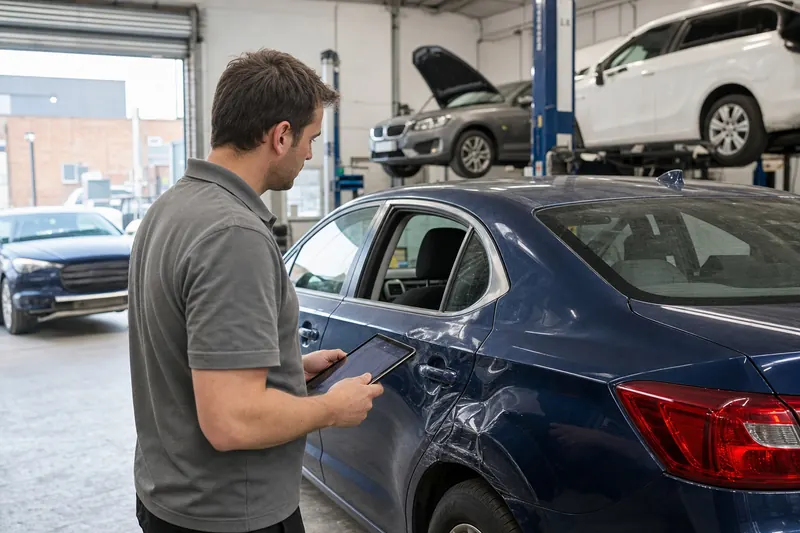
Non-fault accident claims explained
If another driver caused the accident, their insurer should pay to put things right. Here is how that works, what happens to your excess and no-claims bonus, and what slows claims down. -
 Accident claims
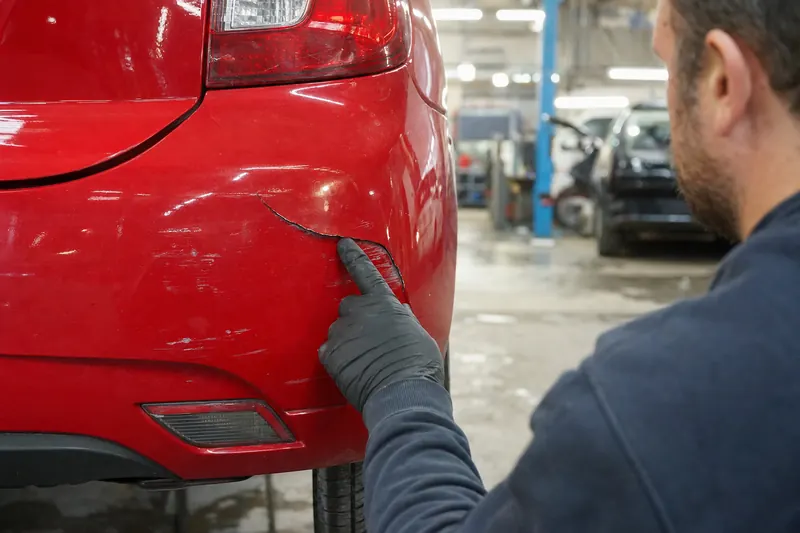
Should you claim on your insurance or pay for repairs yourself?
For small damage, paying yourself is often cheaper over a few years than claiming. Here is how to work it out, and the one thing you have to do either way. -
 Accident claims
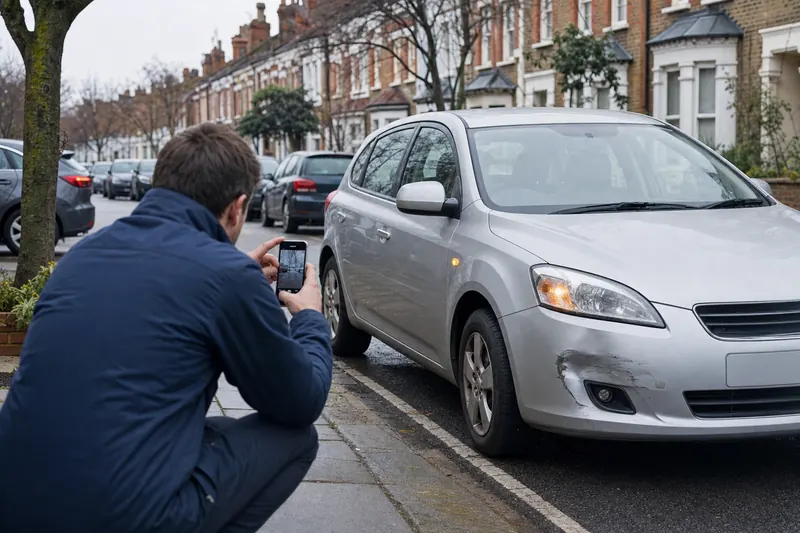
What to do after a car accident
A step-by-step checklist for the minutes and days after a collision: what the law requires at the scene, what evidence to gather, and how to get the car assessed.