Signs of a failing clutch, and what a replacement involves
Revs rising without the speed to match, a biting point creeping up the pedal, judder when pulling away. What each clutch symptom means, where the flywheel fits in, and how to make a clutch last.
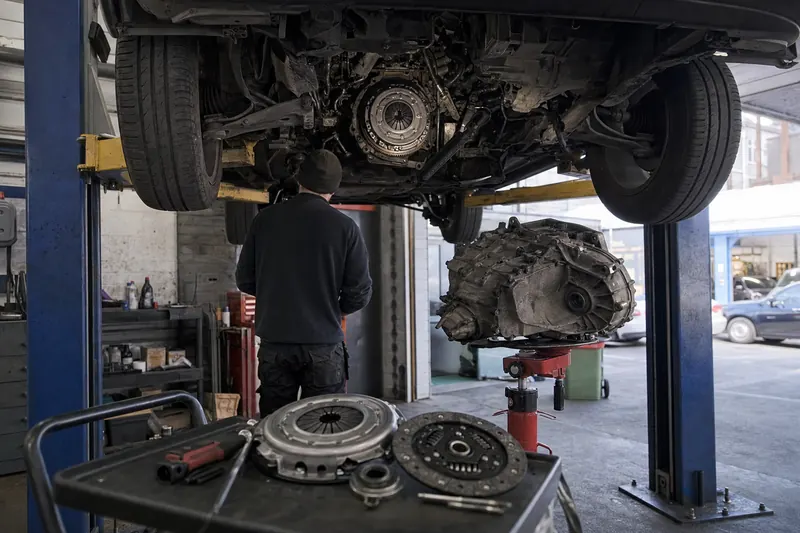
The main signs of a failing clutch are slipping, where the revs climb but the car does not speed up to match, a biting point that has moved higher up the pedal, judder as you pull away, new noises that change when you press the pedal, and a pedal that feels heavy, spongy or sticks. A burning smell after a hill start or a tight parking manoeuvre is the clutch overheating, and it usually goes with slipping.
Some of these mean the clutch plate itself is worn. Others come from the parts around it, which can be cheaper to fix. Knowing which is which saves you from paying for the wrong repair.
How a clutch works, briefly
A clutch is a friction plate squeezed between the engine's flywheel and a spring-loaded pressure plate, and it wears in much the same way a brake pad does. When your foot is off the pedal, the springs clamp the plate and the engine drives the gearbox. Pressing the pedal pushes a release bearing against the pressure plate, which frees the friction plate so you can change gear or stop.
On most modern cars the pedal works the clutch hydraulically, through a master cylinder at the pedal and a slave cylinder at the gearbox. Older and smaller cars may use a cable. Every time you pull away or change gear, the plate slips briefly against the flywheel, and that slip slowly wears away the friction material.
Slipping: the clearest sign of a failing clutch
Slipping is when the revs rise but the car does not speed up to match, because the worn friction plate can no longer grip hard enough to pass all of the engine's power through to the gearbox. You notice it most in a higher gear, accelerating firmly, going uphill or with the car loaded: the rev counter jumps but the speed barely changes.
It starts small, usually only under full throttle, and gets steadily worse. Once a clutch is slipping it will not recover. Driving on it builds heat, which glazes the plate and can damage the flywheel and pressure plate surfaces, turning a clutch job into a bigger one.
Not every slipping clutch is simply worn out. Oil from a leaking engine or gearbox seal can soak the friction plate and make it slip long before its time. If that is the cause, the leak needs fixing too, or the new clutch will go the same way.
A high biting point
On most modern cars the clutch adjusts itself as it wears, and the point where it bites moves higher up the pedal travel. If your clutch now only grips near the very top, and it used to bite lower, the plate is probably getting thin.
The change is what matters. Some cars have a high biting point from new, so compare with how the car felt when you first had it, not with another car.
Judder when pulling away
Judder is a shaking or shuddering through the car as you let the clutch out from a standstill, most often in first gear or reverse. The usual causes are a friction plate that is glazed or contaminated with oil, a worn dual-mass flywheel, or worn engine or gearbox mounts that let the engine rock.
A misfiring engine can feel similar, especially at low revs. If the engine warning light is on as well, a diagnostic check is the first step. Our guide to dashboard warning lights explains what that check reads.
Noises and what they point to
When a noise starts or stops as you press the clutch pedal, that tells a mechanic which part to look at first.
- Whirring or squealing with the pedal pressed: often the release bearing, which only spins under load when the pedal is down.
- Rattle at idle that changes or stops when you press the pedal: often the dual-mass flywheel or a gearbox input bearing.
- A knock or clunk as you switch the engine off: a common dual-mass flywheel symptom.
- Grinding when you select a gear from rest: the clutch may not be releasing fully, so the gearbox is still being driven when it should not be.
Pedal problems: stiff, spongy or sticking
A clutch pedal that feels wrong usually points to the system that operates the clutch, not the friction plate. A spongy pedal, or one that sinks and stays on the floor, often means air in the hydraulics or a leaking master or slave cylinder. On many cars the clutch shares its fluid reservoir with the brakes, so a clutch leak can also lower your brake fluid. If the brake pedal feels different too, read our guide to the signs your brakes need replacing and get both checked.
A heavy pedal can be a stretched or sticking cable, a worn release mechanism or a pressure plate on its way out. These can be cheaper repairs than a full clutch. The catch is that many modern cars have a concentric slave cylinder mounted inside the bell housing, so replacing it means taking the gearbox off anyway. In that case it often makes sense to fit a new clutch at the same time.
The dual-mass flywheel
A dual-mass flywheel is a flywheel made of two halves joined by springs, which soaks up vibration from the engine before it reaches the gearbox. It is common on diesel cars and many petrol cars with turbochargers. When the springs or internal bearing wear, you get judder, a rattle at idle, extra vibration through the car and a knock when you switch off.
A flywheel is not always the culprit, though. LuK, a major clutch and flywheel maker, notes that many dual-mass flywheels returned under warranty for noise turn out to be serviceable, and lists other faults that give similar symptoms: vibration from the auxiliary drive belt system, worn engine or gearbox mounts, driveshaft wear, gearbox bearing wear and engine running problems. It also notes that an existing vibration problem shortens the life of a new flywheel. Before agreeing to a flywheel, ask how it was diagnosed.
What clutch replacement involves
Replacing a clutch means separating the gearbox from the engine. The car goes up on a lift, the driveshafts and gearbox mounts come off and the gearbox is lowered out on a transmission jack. That access is most of the labour, which is why the parts behind the gearbox are worth checking while it is out.
- The old clutch is removed and examined. Its wear pattern can show oil contamination, overheating or a release problem that needs fixing too.
- The flywheel is inspected. A solid flywheel can sometimes be skimmed; a worn dual-mass flywheel is replaced.
- A new clutch kit is fitted, usually the friction plate, pressure plate and release bearing, plus the slave cylinder if it is the type mounted inside the bell housing.
- The gearbox goes back in, the hydraulics are bled and the car is road tested.
How long it takes depends on the car. A small front-wheel-drive hatchback is a very different job from a four-wheel-drive SUV, so we give you a timescale once we have seen it.
Clutch replacement cost
A clutch replacement costs about £670 on average in the UK, and about £1,080 when the dual-mass flywheel is replaced at the same time, according to WhoCanFixMyCar's published averages. These are typical market figures, not our prices. Most of the cost is the labour of taking the gearbox out, so the price varies with the car, and we quote once we know what yours needs.
How to make a clutch last
Most clutch wear comes from slipping it, so the habits that make a clutch last are the ones that keep slipping to a minimum:
- Keep your foot off the pedal while driving. Resting it there can partly release the clutch.
- Use the handbrake or hill-hold on slopes instead of holding the car on the biting point.
- At long stops, select neutral and take your foot off the pedal, which rests the release bearing.
- Pull away with modest revs. High revs and a slow release burn friction material.
- Change down rather than labouring the engine at very low revs in a high gear, which puts extra strain on a dual-mass flywheel.
Problems with the clutch hydraulics often show up at a service before they become a breakdown. Our guide to interim and full car services covers what gets checked.
Clutch repairs in Barking
At Precise Panels, we carry out clutch repairs and replacement at our workshop on Barking Industrial Park, Alfreds Way, and we diagnose the cause before quoting, so you do not pay for a flywheel you did not need. If the clutch is slipping badly or will not release, we offer free collection and delivery rather than you nursing the car to us.
Taxi and private hire cars do more stop-start miles than most, and their clutches wear accordingly. If your cab is off the road after an accident, our guide to PCO replacement vehicles for taxi drivers explains how you keep earning while it is fixed.
To get a quote, describe what the clutch is doing through the quote form or on WhatsApp, or call 020 3645 8132. Our other mechanical services are on the homepage.
Frequently asked questions
There is no fixed figure. Clutch life depends far more on how and where the car is driven than on mileage alone, so a car used for stop-start town driving, towing or carrying heavy loads wears its clutch much faster than one that mostly does motorway miles. A check can tell you how much life is left.
Not for long. Slipping gets steadily worse, and the heat it creates can damage the flywheel and pressure plate, which makes the eventual repair bigger. A badly slipping clutch can also leave you unable to accelerate when you need to. Get it checked as soon as you notice it.
Only if it is worn or damaged. The gearbox has to come out for a clutch replacement, so it is the right time to inspect the flywheel. A worn dual-mass flywheel is usually replaced at that point to avoid paying for the same labour twice, but a serviceable one can stay.
Not always. Some cars bite high from new. What matters is change: if the clutch now bites noticeably higher than it used to, the friction plate is probably wearing thin, especially if you have also noticed slipping.
WhoCanFixMyCar puts the UK average at about £670 for a clutch replacement and about £1,080 when the dual-mass flywheel is replaced too. Most of the cost is labour, because the gearbox has to come out, so the price depends on the car. Treat these as market averages and get a quote for yours.
Sources
This guide is general information from Precise Panels, a car body repair centre in Barking, East London. It is not legal or financial advice.
-
 Mechanical
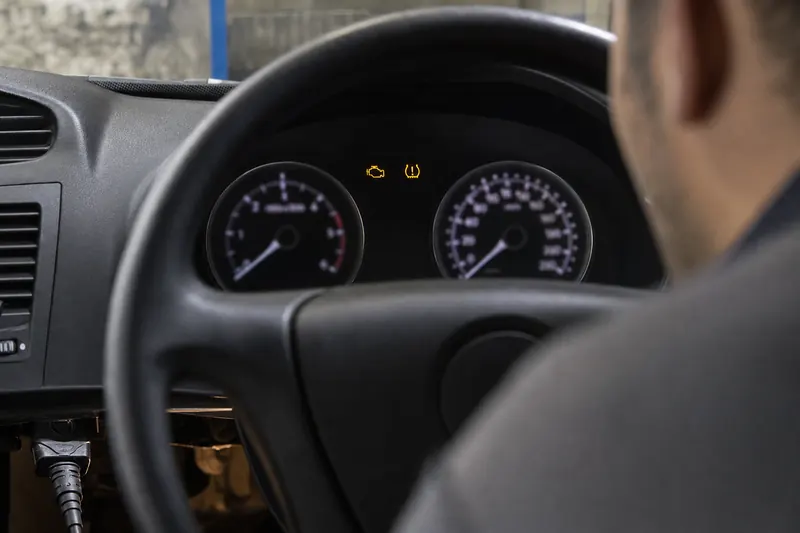
Dashboard warning lights explained
Red means stop, amber means book in, but the detail matters. What the common warning lights mean, what a diagnostic check can and can't tell you, and which lamps fail an MOT. -
 Mechanical
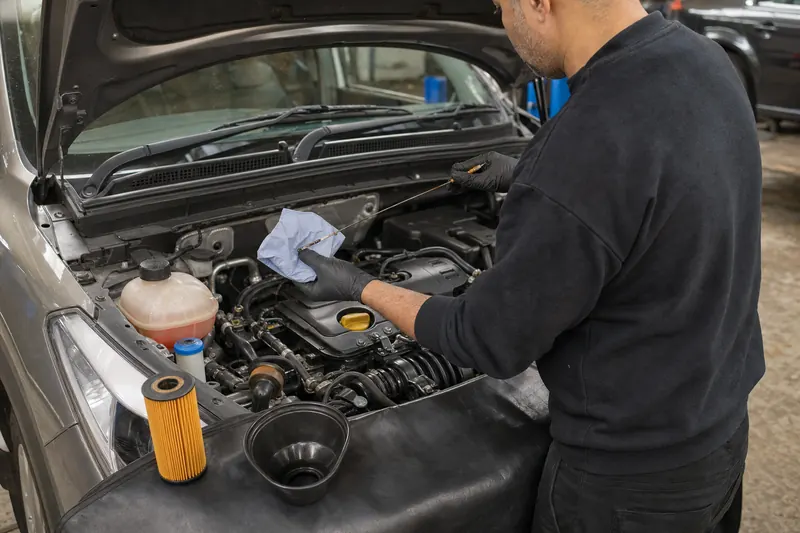
Interim vs full car service: what's the difference?
An interim service is the six-monthly oil and safety check; a full service is the yearly deep one. Here is what each covers, how to choose, and how service history affects your warranty. -
 Mechanical
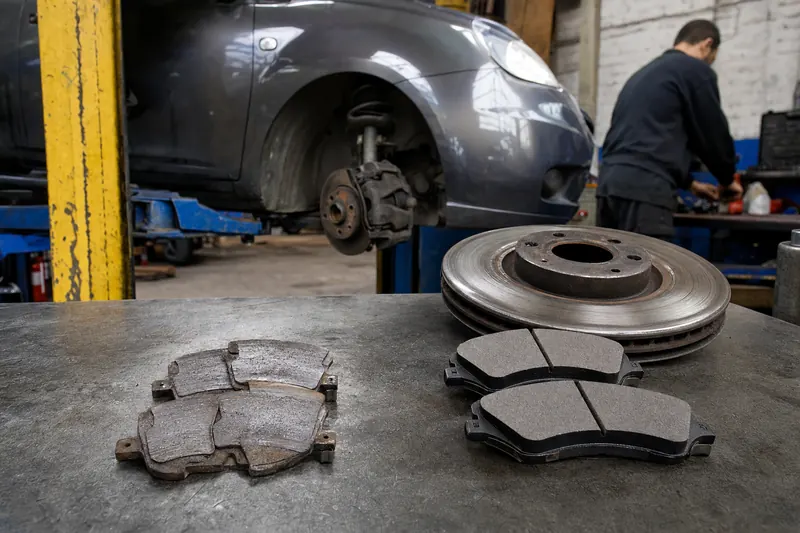
Signs your brakes need replacing
Brakes rarely fail without warning. This is what squeaking, grinding, judder, a soft pedal and pulling usually mean, which ones can wait a few days and which can't.